Deadly Mushrooms of North America

Attionten:The following content cannot be used as any basis for eating any mushrooms. Mushrooms not mentioned in the article may still be fatal. Some mushrooms may be very poisonous. Please purchase edible mushrooms through regular channels.

If thoroughly cooked upon ingestion, the vast majority of mushrooms pose no threat to humans. In fact, deadly mushroom species represent a tiny minority within the extensive divisions of kingdom fungi. For the whole planet, fungal species diversity estimates are currently in the millions, yet deadly mushrooms may only number in the dozens.

Regarding edible mushrooms, it’s always wise to cook them thoroughly prior to consumption. This practice reduces the possibility of gastrointestinal irritation and allergic reactions. Any edible mushroom that is undercooked or raw has the potential to be toxic if ingested.

The difference between a toxic and a deadly mushroom is the difference between recovery and death. While a toxic mushroom will cause physical harm, a normal healthy body will eventually bounce back. One crucial detail not to be missed, any mushroom with mildly toxic properties has the potential to become deadly if consumed by an immuno-compromised, diseased, or elderly individual. Often when a deadly mushroom is consumed there is no way of going back, and no known antidote. Treatments are supportive as opposed to curative, and within a span of days to weeks major organs will fail and recovery will be impossible.

With such an enormous variety of fungal colors and shapes, there is no easy set of rules for identifying deadly mushrooms. Each mushroom species has a defined set of features. In some cases the visual features may not be present, perhaps due to environmental degradation, variable growing conditions, etc. Confidently arriving at a mushroom’s identity depends on the ability of its collector to confirm the identifying characteristics in the field. With proper education, identifying deadly mushroom species is achievable. Here we introduce five species of deadly mushrooms encountered in North America, and some distinguishing features of each.
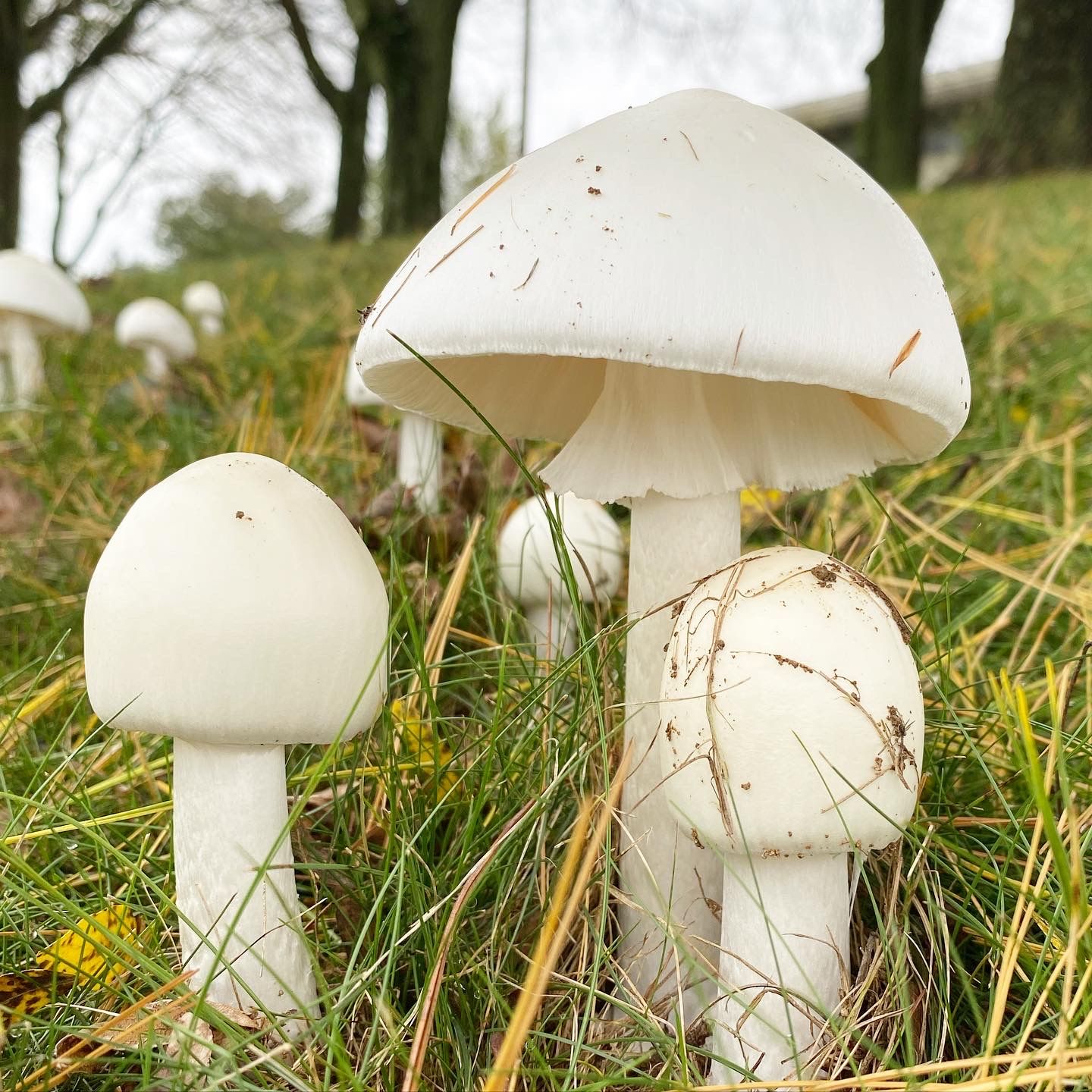
Amanita bisporigera ‘Destroying Angel’

Visual Characteristics: Common white mushroom with a skirt-like ‘veil’ hanging beneath a smooth cap. A sack-like ‘volva’ encases the base of the mushroom which is partially or fully underground. Spore print white.

Deadly Toxin: Amatoxins

These all-white angelic beauties look, smell, and reportedly taste delicious. Unfortunately there is no known cure for amatoxin poisoning, the only resort is dialysis with eventual liver transplantation. Amatoxins cause the machinery for cellular protein generation to grind to a halt. After onset, there are three phases of toxicity during which symptoms progressively worsen until liver and kidney function are compromised. High mortality rate.

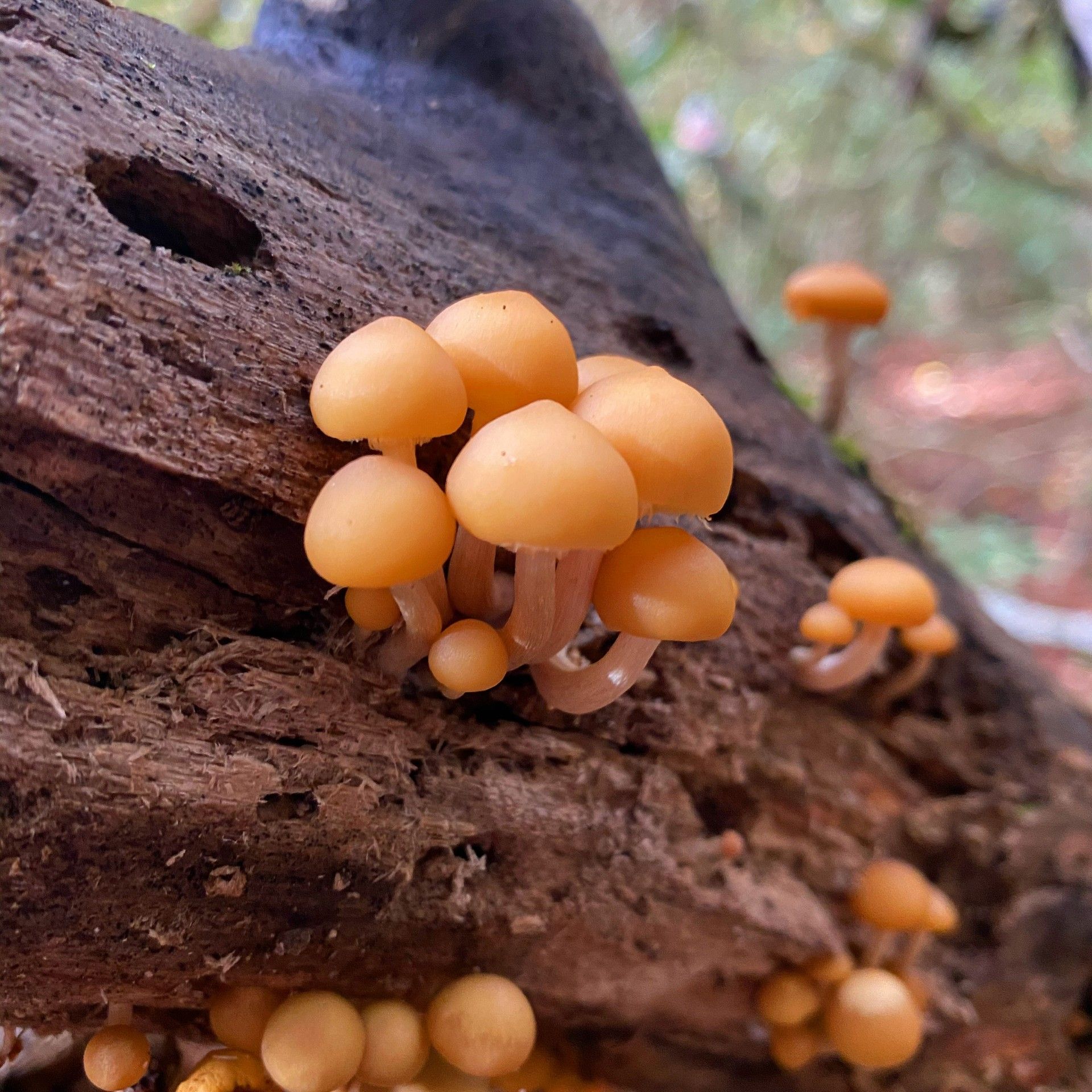
Galerina marginata ‘Funeral Bell’

Visual Characteristics: Little brown mushroom growing from rotting wood, cap slightly bell-shaped. Rather common and inconspicuous in appearance. Spore print rusty brown.

Deadly Toxin: Amatoxins

This is a classic LBM (little brown mushroom), meaning there are many lookalikes that are difficult to distinguish. Confident identification can seem impossible to a novice, since this mushroom looks very similar to edible mushrooms such as Flammulina velutipes and Kuehneromyces mutabilis. Same toxin and mechanism of action as the Destroying Angel.

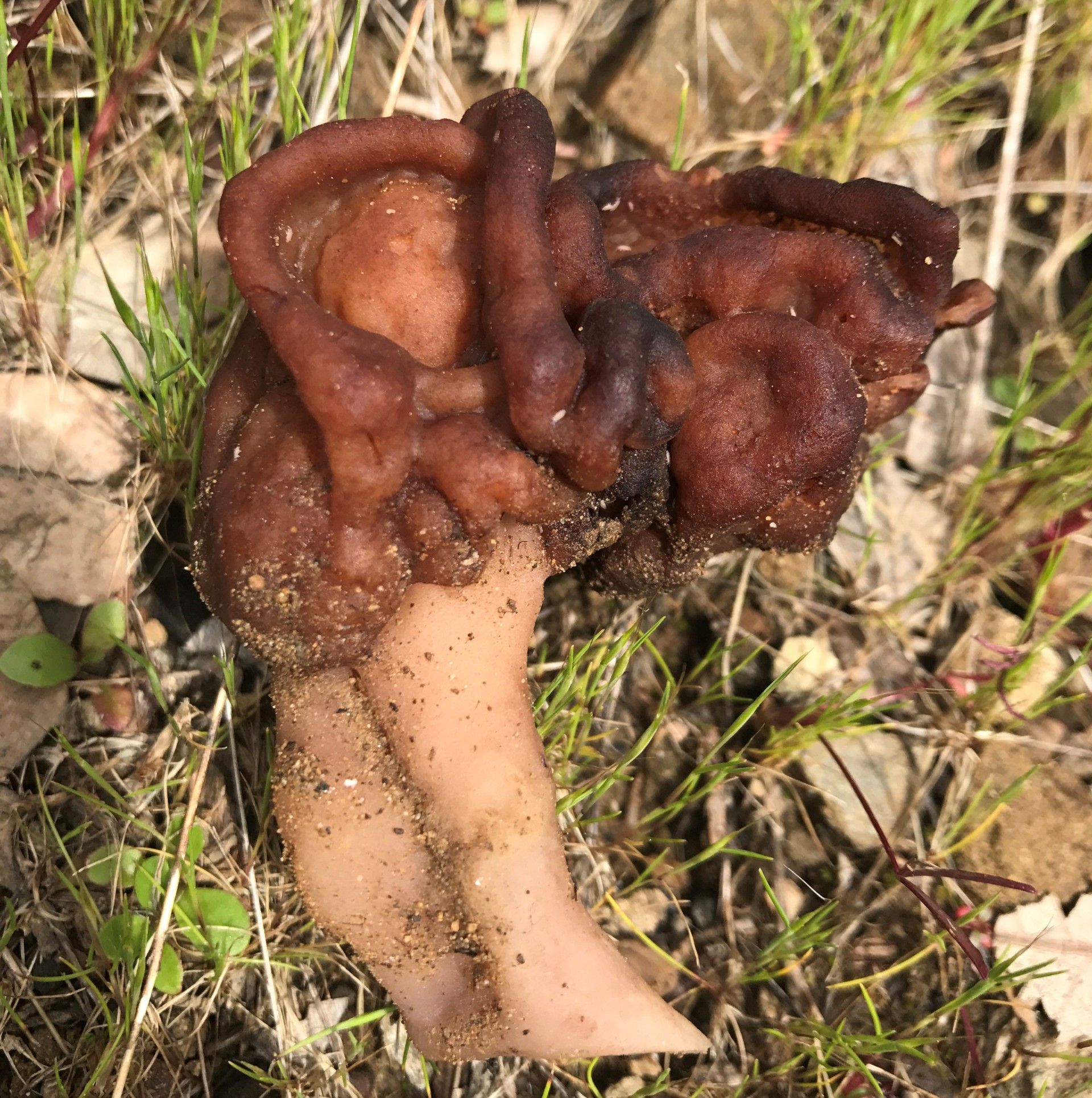
Gyromitra esculenta ‘False Morel’

Visual Characteristics: Flesh colored and convoluted brain-shaped cap atop a thin-fleshed smooth or folded stem. Spore print pale yellow to white.

Deadly Toxin: Gyromitrin

These may be confused with one of the most popular edible mushrooms, morels. Yet Gyromitra species can contain something that morels do not, the novel deadly toxin ‘gyromitrin.’ This unstable molecule is metabolized by the stomach to form hydrazines, toxic compounds that cause liver and central nervous system damage.

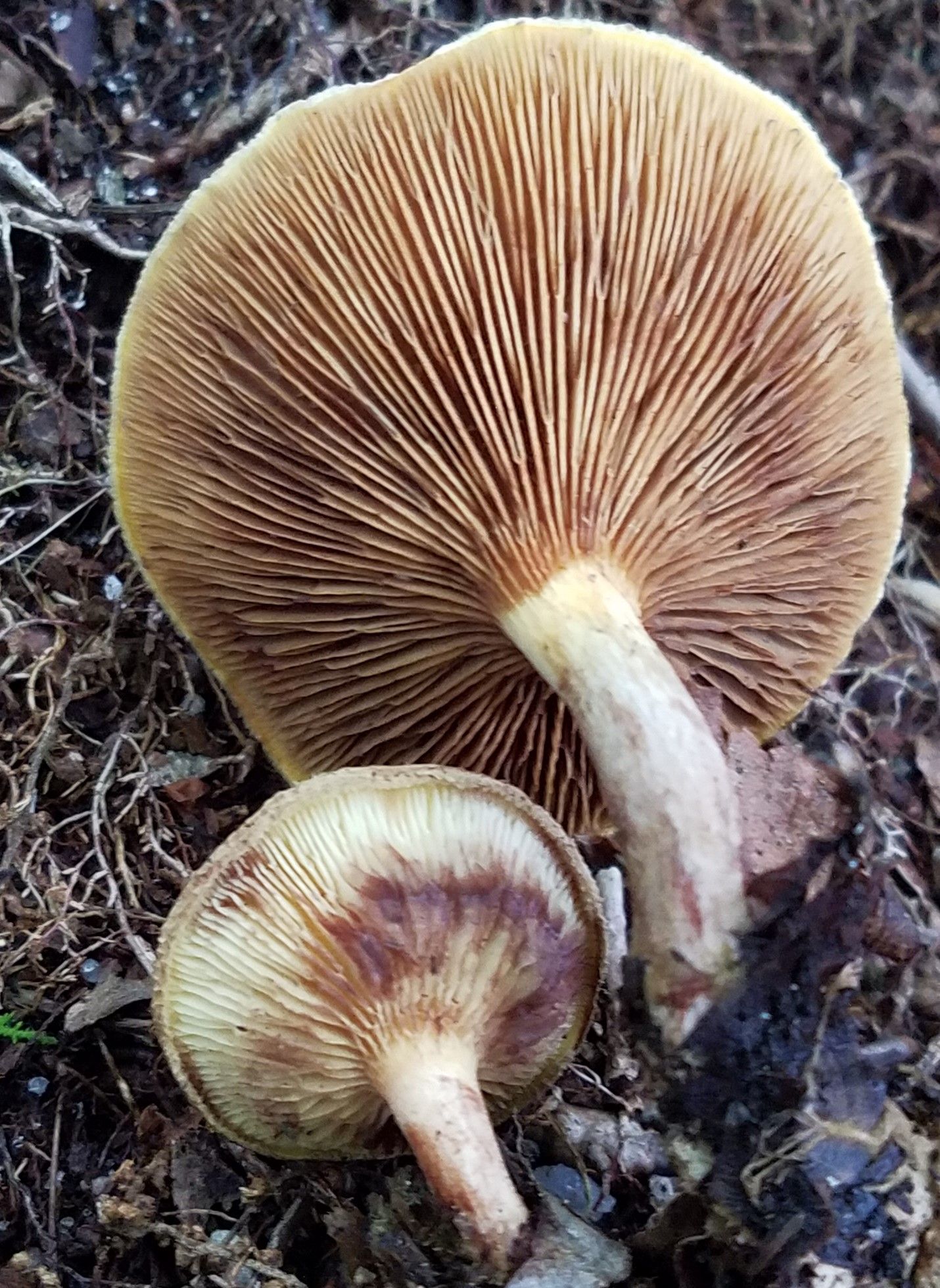
Paxillus involutus ‘Poison Pax’

Visual Characteristics: Pale buff at first, gills stain brown with age. Edge of the cap is in-rolled, another name for this mushroom is the brown roll-rim. Spore print medium brown.

Deadly Toxin: Unknown

Paxillus involutus are perplexing since they are occasionally consumed with no deadly effects. Yet certain cases result in immune hemolytic anemia. Meaning a person’s immune system creates antibodies that attack and destroy their own red blood cells.

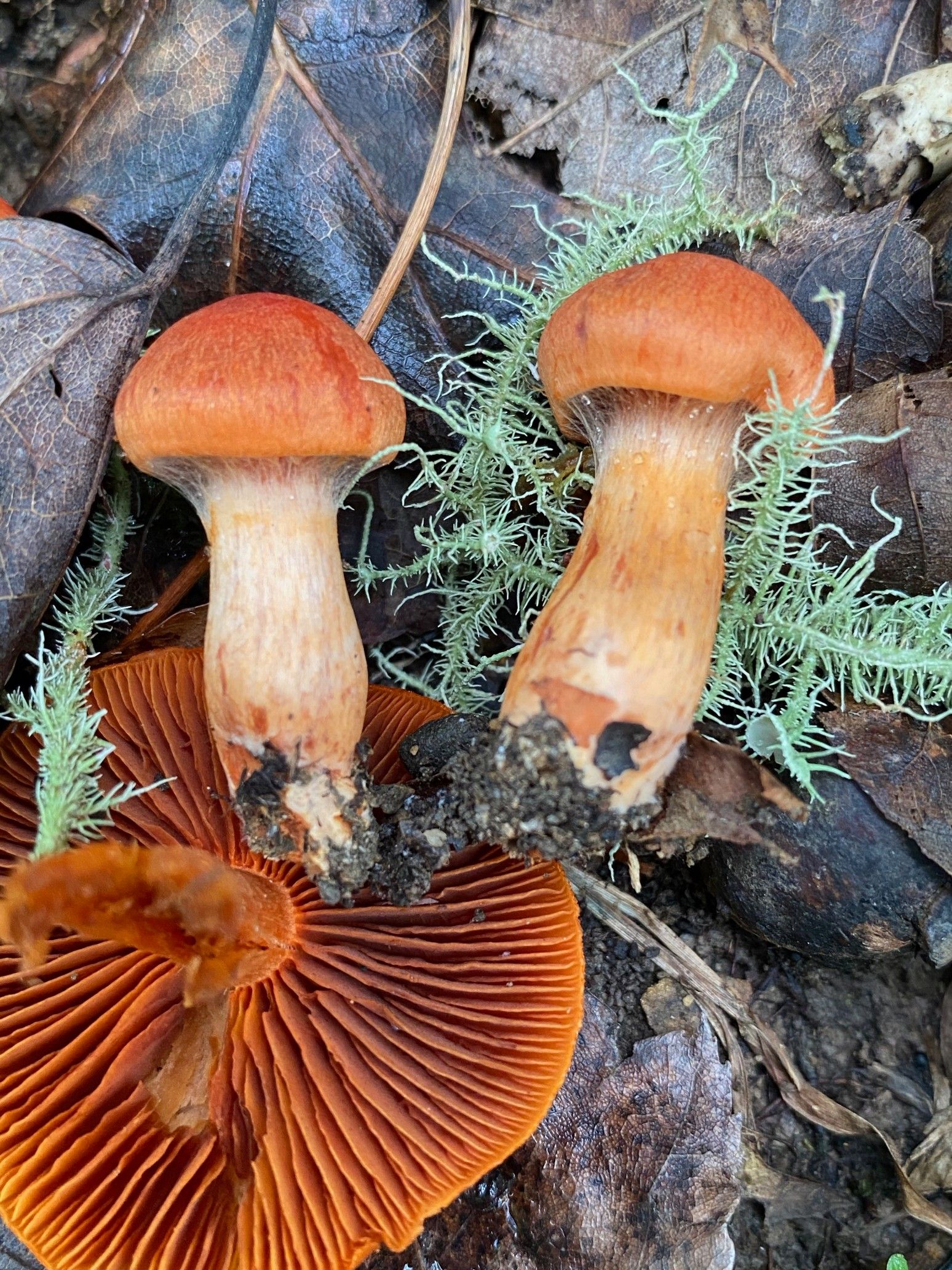
Cortinarius speciosissimus ‘Deadly Webcap’

Visual Characteristics: Red-orange convex cap, scales on the stem. In young specimens the gills are covered by a ‘cortina’ or cobweb-like veil. Spore print rusty brown.

Deadly Toxin: Orellanine

Deadly webcaps create a false sense of security since symptoms of orellanine poisoning may be delayed for weeks. Then, flu-like symptoms precede kidney failure and death will follow unless dialysis is received. Dialysis continues for months, until a suitable donor is found. Recovery is a long and excruciating process.

In summary, always exercise caution when foraging. Never eat a mushroom unless you are certain it is safe for consumption. Stop and think if you can identify a mushroom with the same certainty in the field as you would an apple in the supermarket.